May 27th, 2014 |

Author:
crystalgable

Well, the juice cleanse has reached its end. What a ride! I learned so much and lost 9 pounds in the process. I think what I learned the most was to be conscious of what I’m eating every day. That may sound too new-agey to some, but I really learned to think about what I’m putting in my body. I also learned patience over the last 14 days. I gained the insight that I don’t have to head to the refrigerator every time I feel slightly hungry. I also learned to be very, very grateful for all food… even plain, simple food like an unsalted tomato. Food is really delicious if you allow yourself to actually go a few hours without eating and then taste something when you experience true hunger.
I have learned what a deep, restful sleep you experience when you are completely off caffeine. There really isn’t anything like it. I wake up and feel completely rested and ready to start another day. I love the ritual of sipping a warm glass of water with lemon in the mornings and will definitely continue it. I’m still going to juice for breakfast, too. If you had told me 3 weeks ago that a glass of vegetable juice would fill me and sustain me for the whole morning, I would never have believed it.
Another plus from the juice cleanse is that I have no desire for desserts. I have battled a craving for sweets at night for as long as I can remember. I don’t even think about that now. I enjoy every bite of dinner and just feel full and grateful for actual food. I’m sure I will share a dessert on our vacation coming up, but there is no constant preoccupation with how I’m going to score some sugar after dinner.
Some more people have told me that they feel inspired to try juicing and I’m so excited about that. I will do another juice cleanse in 3 months. I will probably do a 3 or 5 day plan this time around now that I have really cleaned out my system. I have August 25th circled on my calendar. Let me know if you to do it, too!
May 23rd, 2014 |
Author:
crystalgable

Meet my new best friend, Red White and Blue Juice from Rebootwithjoe.com This juice is so delicious that it almost can’t be communicated. You have got to try this juice! The combination of watermelon, blueberries and greens is fantastic. I think it calls for chard, but I had a huge bag of collard greens that I subbed in and it was incredibly tasty.
Today is day 12 of the cleanse. My energy level is much better and I really could go on forever eating like this… The social aspect of it is the most difficult thing. I miss eating out with my friends. They invited me out for Mexican food yesterday and said that I could bring my juice with me. Can you imagine? Eleven days without food and I’m supposed to sit at a table surrounded by the smells of beans, rice and warm tortillas… I’ve heard of people doing just that, but they must be much stronger than I am.
On a happier note: I’ve been receiving messages from many friends telling me that I’ve inspired them to get healthy! I was so pleased to hear from two different people from high school and some others who live in different states. I’ve been sending tips and referrals via Facebook instant message. What fun!
A lot of people have asked where to go for a program or for recipes. The best place is Reboot with Joe. It is one of the most well planned websites that I’ve seen. He includes recipes, tips, motivational stories, forums, and his own personal story. I talk more about that here. If you haven’t watched his documentary, Fat Sick & Nearly Dead, please do yourself a favor and watch it now! This film is miraculous and a labor of love. Watch this movie and discover what fruits and vegetables can do for many, many health problems.
For recipes, I also love Organic Avenue. This site was started by a lovely lady named Denise Mari who lives in New York City. After a traumatic childhood in which she lost her baby sister and mother to cancer, she began learning about nutrition and found out about the dramatic health results that are achieved from juicing. She started juicing for herself and making the juice for friends. This became a home business where she prepared the fresh cold-pressed juice and delivered it around Manhattan. Today, she has 12 locations and just opened a Bed and Cleanse in the Hamptons.

I also want to mention that organic is the way to go with a juice cleanse. Not only are the fruits and vegetables free from pesticide and other chemicals, but they are about 40 percent higher in vitamins and minerals. You might argue and say that you can’t afford the extra expense but ask yourself if you can afford cancer treatment or diabetes medications? We have to invest more in our own health. Health care starts at home. If you truly can’t afford to buy everything organic then stick to buying the dirty dozen from the organic section.
Most of my produce has been organic on this journey but yesterday I grabbed some nectarines at the grocery store. I forgot to make sure they were organic and headed home to make some juice. I combined the nectarines with organic celery, organic cucumbers and organic kale. After drinking the juice, I started getting a headache that lasted the rest of the night. I truly believe that the headache was caused by the pesticide on the fruit. After consulting the dirty dozen list, I found out that nectarines are one of the most highly sprayed fruits. I should have at least put them through a nature fruit wash in the sink. Lesson learned.
Have you watched Fat Sick & Nearly Dead yet?
May 19th, 2014 |
Author:
crystalgable
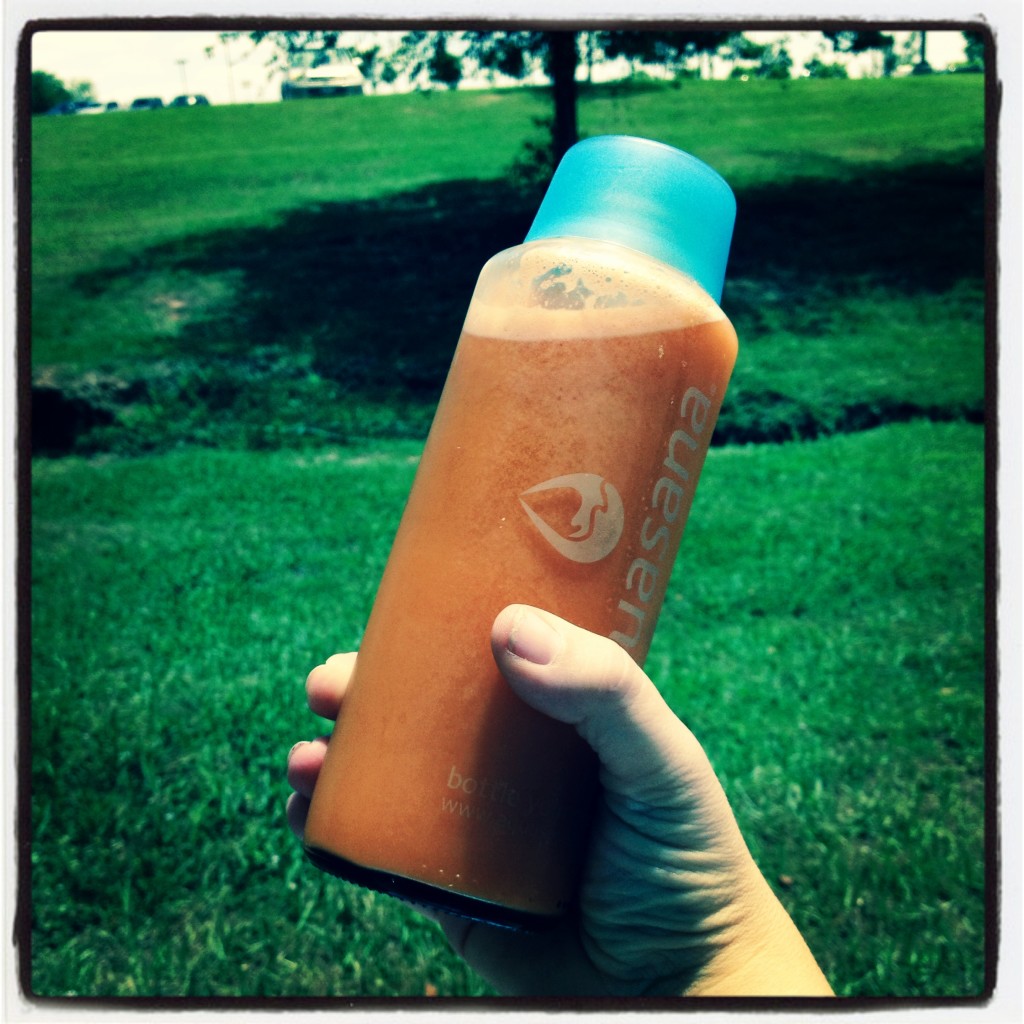
I’ve made it a full week and am still going strong. There was a moment of wishing I could quit on Friday when my husband said, “Oh, come on… You don’t have to do this on the weekend. Let’s have a nice dinner together.” Visions of tacos and guacamole danced in my mind for about two full seconds before I remembered my commitment to myself and to you, my audience. Ha! So, it was a juice that I had for dinner instead of Mexican food.
I did switch up my normal recipe and try a new one from The Reboot with Joe Juice Book. Gazpacho Juice! It was amazing. It had tomatoes, cucumbers, celery, red bell peppers, onion, parsley, lime, salt and black pepper. It was amazing! It tasted like a fresh out of your garden V-8 Juice. What a nice treat for the weekend.

Saturday and Sunday I just took it easy and made fresh juices and took them to the park in an insulated lunch bag. It was so nice to be outside in the breeze, laying on a blanket and catching up on Vegan Health & Fitness magazine. By the way, there’s a really great article on Matthew Kenney in the May/June issue. If you don’t know who Matthew is, be sure and check out this video. He’s fantastic and has several really exciting restaurant projects happening soon!
So, I wanted to weigh myself since it’s been a week on this cleanse. I didn’t want to be fanatical and weigh every day but I did want to know about how much weight I lost in a week. I carefully approached my digital scale and hesitantly stepped on. What a pleasant surprise. I was exactly 7 pounds lighter. I can see why people really get into juicing. Once you gain momentum, it’s not that difficult and the results are incredible. My eyes and skin are already starting to respond. I wake up and feel really great. I hope other people will give it a go. Week 1 is now done!
May 16th, 2014 |
Author:
crystalgable
Here’s a joke for you… How do you get time to stand still? …. Go on a juice fast. Ha Ha.
But seriously, I’ve been thinking a lot about food. When the television is on, I am inundated with images and videos of fast food. When I walk into the grocery store, the signs and advertising are almost screaming at me. Everywhere I go, I seem to noticed the messages more that say, “Eat. You must eat to be happy.” It really is a fast food world that we live in.
Guess how much the fast food industry spent on marketing/advertising in 2010? Ten million dollars? Twenty millions dollars? Not even close. According to Yale’s Rudd Center for Food Policy and Obesity’s new report, it’s 4.2 billion dollars! Is that not unreal? It’s a wonder that anyone ever is able to buck the trend and get healthy.
What healthy changes have you added to your lifestyle?
May 15th, 2014 |
Author:
crystalgable
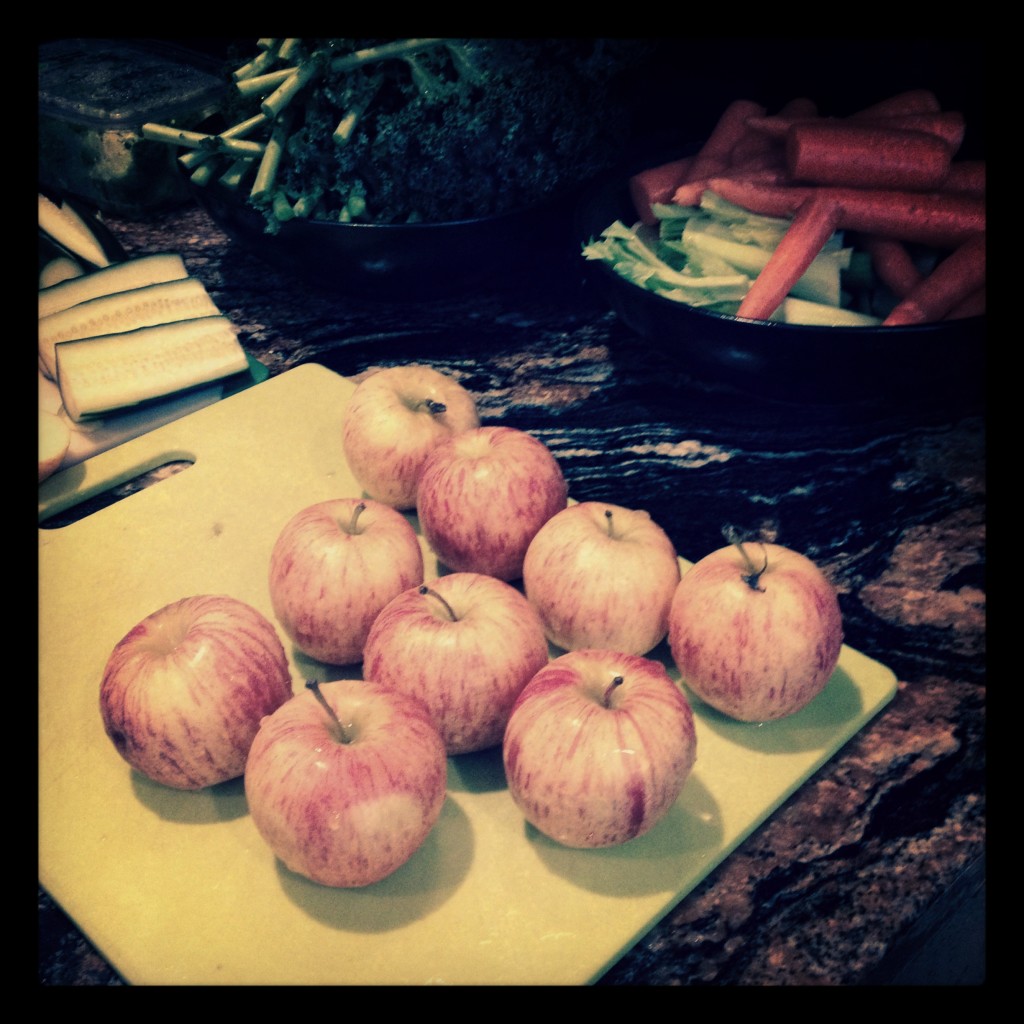
I travel to Marshall every Wednesday and work with the Get Healthy Marshall group. They are so incredibly supportive of any healthy endeavor, so it was no surprise when I arrived and they had already had the juicer out. We tried a crazy mix of beets, kale, apples, celery, carrot, ginger, radish, italian parsley, and spearmint. The juice turned out the darkest shade of magenta that you’ve ever seen and boy, did it have ZING!
We listened to Victoria Moran’s Main Street Vegan Radio Show on Unity FM. Her guest today was none other than Joe Cross of Fat Sick and Nearly Dead. I highly recommend listening to the show. It’s available any time, not just live. You can listen on iTunes or Stitcher. It was so great to hear Victoria interview this legend of the juicing community. He made some great points about the fact that we all need to love ourselves and be connected to vegetables. When this connection is lost, health suffers.
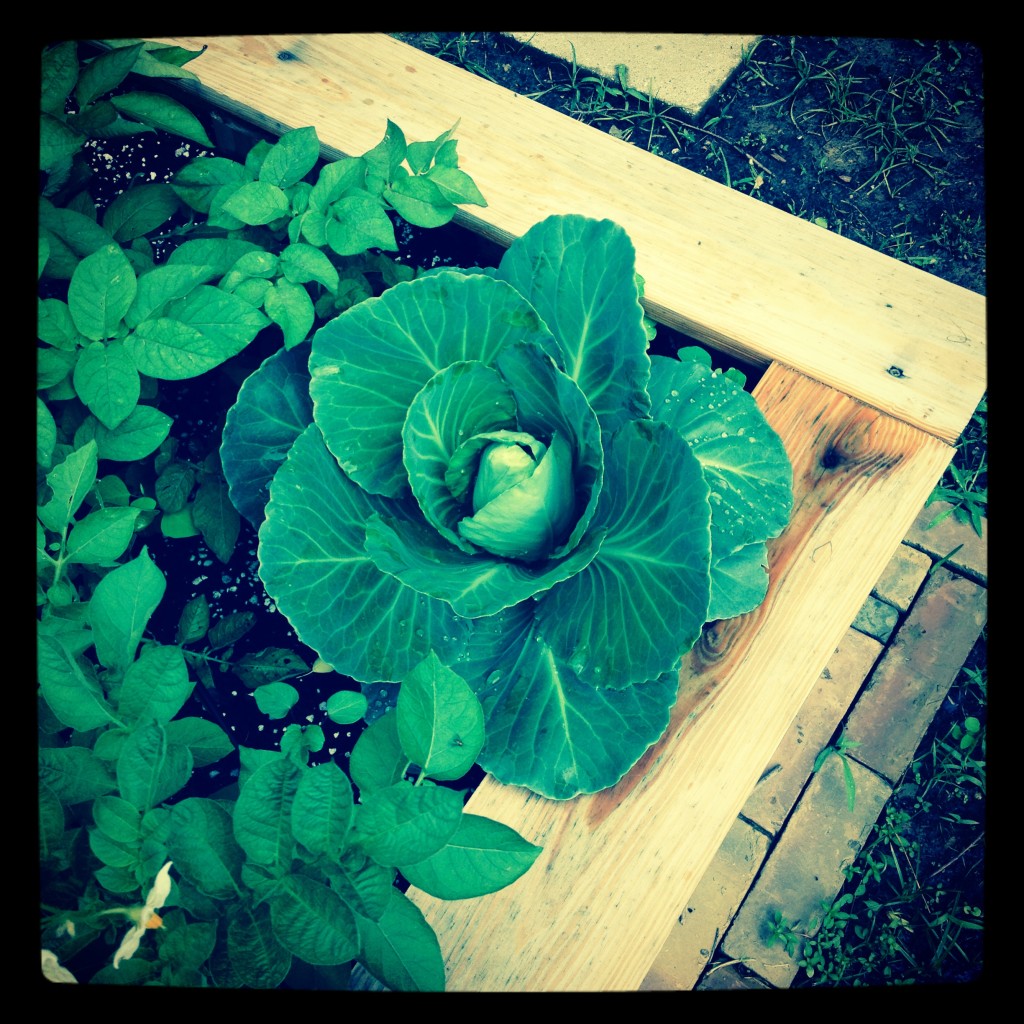
On the way home, I had to re-stock my supply of produce. Kroger had some nice pears, pineapples, blueberries and greens. So I loaded up and am ready for the rest of the week.
One lesson that I have learned on this journey is to not let my blood sugar get too low. In other words, I don’t go too many hours without a juice. It can leave you hungry, dizzy and pretty morose. If I stay on schedule with the juices and water then everything is fine.
I’d love to hear from some of you that are following along. If you’ve juiced before, what lessons did you learn?
May 14th, 2014 |
Author:
crystalgable

Tuesday, May 13, 2014
It’s funny, this cleanse has been harder than I thought in some ways but easier in others. I don’t feel hungry. Thank goodness! But I do feel a little foggy today. Maybe from getting so much sleep last night… 11 hours of sleep! That’s got to be a record.
I wanted to talk about why I’m doing this. Some people think that juicing is ridiculous because much of the weight that is lost is regained in the following months. This can be true but take a look at Jasmin Singer of Our Hen House. She has used periodic juicing plus a nutritarian diet to lose over 100 pounds and keep it off! She was even featured on the Dr. Oz show. She has been a tremendous example to me and I feel encouraged when I think of her success.
Another person who inspires me is California’s Jeff Searcy. I met Jeff at Marshall’s Healthfest in January. He juices for himself and cooks meals for his four daughters at the same time! He has lost almost 75 pounds!
Another great example is Joe Cross of Fat Sick and Nearly Dead. He lost almost 100 pounds and reversed his autoimmune disease called chronic urticaria. Joe developed a way to use juicing and a plant-based diet most of the time, while eating food from the “fun side of town” as a treat. He is really a powerful motivator.
If weight loss isn’t a catalyst for you to do a cleanse, think about repair factor… During a juice cleanse your body is freed up from the monumental task of digesting food all day. The cells are flooded with nutrients and the body is able to repair itself. Not only that– your body is free to remove chemicals, toxins, pesticides, and other poisons that are stored in our fat! If that isn’t reason enough to do a cleanse, I don’t know what is.
9pm: Today went soooo much better than yesterday. The headache was nowhere to be found. I did feel a tiny bit dizzy in the afternoon but I drank another juice and felt better immediately. The coconut water was a nice treat, too. I just doctored it up with some lemon and strawberry juice.
May 13th, 2014 |
Author:
crystalgable

Night before:
Hi! I’m Crystal and it’s the night before the first juice cleanse of my life. I have been thinking about doing this for some time. Sure, I’ve made juice in my juicer before, but I’ve never replaced every meal with this “liquid sunshine” called cold-pressed juice.
I’ve tried so many drastic things to lose weight in the past. I’ve taken fiber pills, diet pills, slim fast and Chitosan. I’ve been to Weight Watchers, Nutrisystem, T.O.P.S. and Healthy Figures. I’ve done Atkins, South Beach, Body for Life and Fit for Life. You name it and I’ve probably done it but for some reason I feel really hopeful about this. I’ve been vegan for almost 3 years and it has really helped my health. I lost 28 pounds the first year and even though the weight loss has slowly tapered off, I know that a reboot is exactly what I need. Over the past couple of years, more and more processed food has inched into my diet. I learned that I could sneak some potato chips or vegan cookies here and there and not gain any weight. Of course this meant that I wasn’t losing any more weight either.
So tomorrow I will embark on a new type of journey. I will rise and sip a glass of warm water with lemon and then when I feel awake enough, I will make a fresh glass of Mean Green. I will consume nothing more than fruits and vegetables and water for 14 days. I am hopeful and I am ready. Wish me luck.
Monday, May 12, 2014
7am: I woke up today and a little voice inside whispered, “maybe today isn’t the right day to do this…” but I quickly pushed that defeatist thought aside and pulled some of the beautiful produce out of my refrigerator. That’s one great thing about buying a bunch of organic fruit and vegetables. You don’t want to waste any of it. I decided to start the juice cleanse with a batch of Mean Green Juice for good luck. That’s the juice that Joe Cross drank in the incredible documentary, Fat Sick and Nearly Dead. If it’s good enough for Joe, it’s good enough for me. So the recipe was 16 kale leaves, 2 cucumbers, 8 celery sticks, 4 apples, 1 lemon and a 2 inch piece of ginger. I have to say, it was absolutely delicious. It was filled with so many enzymes and nutrients it was like a blast of tangy energy. My scalp felt like it was filled with pins and needles… but in a good way. I promise. I saved all the veggie scraps and filled my pressure cooker with them plus 8 cups of water, 2 bay leaves, garlic, onions, oregano and thyme. In 10 minutes I was able to have organic vegetable broth to sip on later if I get hungry.
11am: It’s almost lunchtime and I’m feeling surprisingly good. There is a hint of hunger in my tummy but I’ve been sipping on water and the feeling isn’t bad at all. I really feel great. I’m going to make a Carrot Apple Ginger Juice for lunch and am pretty excited to taste it. All the carrot pulp is going to get saved in the freezer to make carrot cheese for salads after the cleanse. I learned about carrot cheese in the amazing book: Organic Avenue by Denise Mari. It feels good to know that the pulp from the juicing will have another purpose.
2:30pm: I feel the dull ache of a headache coming on… I probably should have transitioned off caffeine a little bit better than I did. At least I haven’t had coffee in a week. I’ve just been having chai tea in the mornings. I’m sipping on a cup of the veggie broth that I made. It’s pretty good but I sure would love to add some salt. I’m going to resist that urge and simply give thanks for the warmth that it gives.
6pm: I’ve had my dinner juice and cup of veggie broth. I’m actually am less tired than I usually am at this time. My head has a slight headache but I think it’ll be gone by tomorrow. I picked up some coconut water at the health food store and that should help, too. Joe Cross recommends drinking one serving of coconut water a day during a cleanse to help with electrolytes and potassium. I cleaned the juicer and actually spent much less time cleaning up after dinner than I usually do.
8pm: The headache has worsened and I feel chilled. I am going to bed early. I’m almost done with day 1 and am looking forward to seeing what the rest of the week brings. I hope you’ll follow my journey and see what it holds. I’ll share some of the things that I learn and I’d love to hear from you if you’ve juiced before. Namaste.
April 29th, 2014 |
Author:
crystalgable

A guest blog by James McWilliams
Environmental advocates who promote eating “real” food (a deeply problematic concept for anyone who knows the history of food) as a necessary part of an ecologically responsible diet miss the point. In doing so, they render their larger message of eating in an environmentally responsible matter irrelevant. And not just a little irrelevant. Totally so. To understand why, it helps to take a closer look at the recent enviro-foodie reaction to butter.
Foodie environmentalists love butter. In part, they love it because it’s food that their grandmother would have eaten—this prerequisite being one of the more arbitrary elements of this somewhat precious culinary ideology. But they also love it because they are foodies and, tautology aside, are reluctant to allow anything as inconvenient as ecological reality or animal welfare to come between external justice and the internal pleasures of the palate. These are people who are all for “An Inconvenient Truth” but not so much for inconvenient truths.
It’s easy to overlook this reality. Foodie-enviros spin bucolic narratives that highlight the benefits of pasture-raised this and grass-fed that as “evidence” that one can now, if she can afford it, viably eat animal products and remain dedicated to environmental causes (this is, in many ways, why such issues as pipelines and dirty coal are so appealing—the connection between the personal and the political is less obvious). The reason they get away with these stories is that our collective base of knowledge on these matters remains lamentably thin. People such as Allan Savory, who bill themselves as planetary saviors, have thus excelled at a TED-ish foodie brand of duplicity, promoting ideas that, at the end of the day, might be just as damaging as those promoted by Monsanto and Cargill. (Eat beef, reverse global warming?! You can anything at a TED talk.)
But every now and then the gentlemanly facade is lifted and a whiff of truth wafts out. Which brings us back to butter and the foodie-enviros who support it. Last month butter got some temporary good news on the health front. The prospect that butter could be healthy sent foodie-enviros into a froth of excitement. Mark Bittman, foodie-enviro extraordinaire, led the celebration, declaring in both a headline and the text of his Times column that “butter is back.” He then explicitly advised with oracular confidence: “You can go back to eating butter, if you haven’t already.”
But then the other shoe dropped. Turns out the study had flaws. Serious flaws. Flaws serious enough for important people at fancy places such as Harvard to call for a retraction. And then everyone got sheepishly silent. When critics (myself included) harped on Bittman (who has written hundreds of recipes that call for butter) for his rush-to-judgment, suggesting that it contradicted his purported green mission, not to mention that it ignored animal welfare issues that he has long claimed to care about, something strange happened. I don’t use this word lightly, but what happened was Orwellian.
Suddenly, all discussions of health were tossed to the curb. Indeed, as criticisms of the study swirled, the foodie-enviros now switched the media focus to industrial agriculture in general. Tom Philpott blogged that, in criticizing Bittman for his premature embrace of butter, I was somehow advocating butter substitutes—a non grandma food—and, in so doing, was acting as the handmaiden of industrial agriculture. Wha? (Bittman, for his part, thanked Tom with a tweet.)
This all left me baffled, in part because I’ve never advocated a butter substitute in my life. But more so because the biggest supporters of the study that these foodie-enviros were so enthralled to promote were the meat and dairy industries themselves. I urge you to see what Big Ag had to say here, and thus whom the foodie-enviros got in bed with in order to back butter.
I’m still wondering by what logic Philpott thinks that supporting butter is not supporting industrial agriculture. Last I checked butter was as industrialized as any product on the face of the earth. To call a vegan a defender of industrial agriculture strikes me as a case of the Philpott calling the kettle black, or at least a complete lack of understanding that a plant-based diet does more to deter industrial agriculture as we know it than any other single measure.
But it’s back on the environmental front where the hypocrisy of the foodie-enviro position really hits home. Conservation magazine (for whom I write) recently declared that “Butter is Toast.” Why? It’s simple: “The carbon footprint of butter is over four times that of margarine.” The article is here; it’s short, it has not been called for a retraction, and you should read it. (emphasis emphatically added)
But for now, let the bitter lesson be clear: it’s time to stop trusting environmentalists who are led by their palates. These folks are perfectly happy to fiddle while Rome burns. But they forget that there are still people out there who believe in the power of personal choice to create genuine change for ourselves, animals, and the planet. Let’s not allow ourselves to be forsaken.

James McWilliams is a professor at Texas State University and the author of four books on food and agriculture, including Just Food: Where Locavores Get it Wrong and How We can Truly Eat Responsibly. His work appears regularly in Slate, The New York Times, Harper’s, The Washington Post, and the Atlantic.com. He blogs at his Eating Plants Blog and lives in Austin.
March 4th, 2014 |
Author:
crystalgable

Meatout was founded in 1985 to encourage people to “kick the meat habit” for a fresh start to spring.
Meatout facilitates and brings together nearly a thousand pro-veg outreach events in every state and two dozen countries.
The goal of Meatout 2014 is to inspire 25,000 people to pledge to eat vegan on March 20th.
How to help…
Hold an event in your community.
Join an event in your community.
Ask your friends to take the Meatout Pledge.
EZ advocacy… use your social networks to spread the word about Meatout and encourage pledges.
February 21st, 2014 |
Author:
crystalgable

Instead of treating yourself to a Friday lunch at your favorite place, why not bag a lunch and donate the money you would have spent on going out? The money that you were going to spend on lunch may not seem like a lot to you, but could help VINE buy hay, birdseed, grains, and greens for chickens, cows, ducks, sheep, geese, turkeys, pigeons, doves, and emus rescued from abuse and neglect. Nearly 500 animals live at VINE, and all of them need breakfast, lunch, and dinner every day.
We are asking you to get together with your friends, family, co-workers or classmates to collectively give your lunch money to VINE on Fridays. You could do this once or, even better, make it a “first Friday” tradition every month. Encourage people in your community, office and /or school to do the same by joining you for VINE Friday Lunch!
This is a fun way you can make a difference right from where you are. You get to decide the details. Will you eat together inside or outside? Will it be a pot-luck or will everybody brown-bag it? If this will be a regular lunch date, will you always meet in the same place or will you move around for variety?
Not up for organizing an event? That’s OK. You can have Friday Lunch with VINE anyway! Just brown bag it (or use a groovy lunch box like ours) on Friday and send the money to save to VINE. You can do this once, every Friday for a month, one Friday every month or every Friday.
VINE Friday Lunch To do list
1. Pick a date: decide when you want to give your lunch money to VINE
2. Contact VINE for brochures to share with your lunch-mates
3. Decide if you are collectively bagging your lunch or having a pot luck(*) event.
4. Choose a place to meet up with your lunch-mates.
5. Decide who to invite.
6. Invite them!
7. Have fun at lunch. Enjoy your lunch-mates’ thanks for organizing such a fun get-together.
8. Collect donations—all participants can decide for themselves what they would have spent on lunch, though of course anybody who wants to donate more should feel free to do so!
9. Send in the donations to VINE by check or via PayPal.
10. Feel good, knowing that you have helped to feed the animals at VINE.
*If yours will be a workplace or on campus lunch, it may be a good idea to plan to bring in a pot luck meal. If people don’t have time to pack a lunch, bring a lunch for them. Pick something easy that you like to cook that feeds a lot of people such as a crock pot of vegan chili or soup. You may want to make extra, so that you can invite anyone who passes by to join you.
Questions? Contact Jennifer at Jennifer@bravebirds.org for any support you may need for this project!

 Posted in
  Tags:
Tags: